

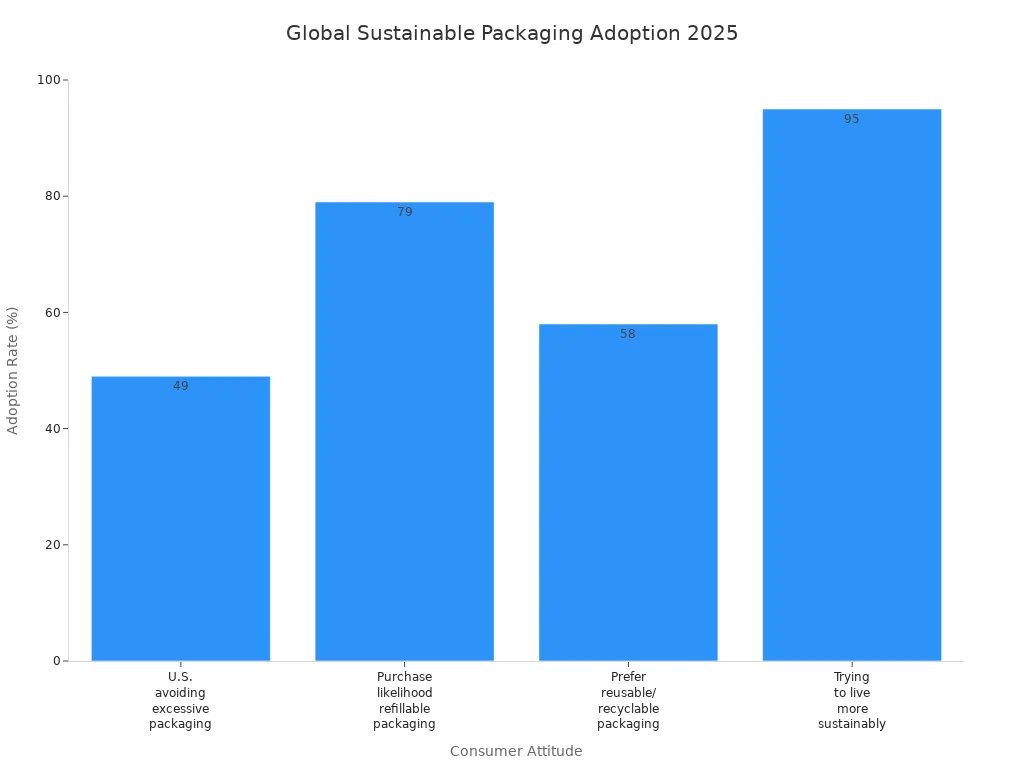
You see more people picking products with less trash in 2025. Almost half of U.S. shoppers skip things with too much packaging. You might spot refillable or recyclable packages at stores you like. Look at these numbers:
| Statistic | Value | Source |
|---|---|---|
| U.S. consumers avoiding excessive packaging | 49% | Statista |
| Likelihood of purchasing based on refillable packaging | 79% | Trivium |
| Consumers preferring reusable or recyclable packaging | 58% | Shorr |
| Consumers trying to live more sustainably | 95% | NielsenIQ |
You help the Global Shift by caring about Earth. Companies feel this and change how they make products. Your choices help decide the future of packaging.
Global Shift: Drivers
Environmental Impact
The world is changing fast because of the Global Shift. People care more about the planet now. You see lots of waste from packaging, especially plastic. Many shoppers think sustainable packaging is very important. Eight out of ten shoppers will not buy if packaging is not eco-friendly.
Companies know you want clear answers about green packaging. You do not want to be fooled by “greenwashing.” You want brands to show real action, not just talk.
Unboxing matters to you. You feel happy when a package uses less material and is easy to recycle. Studies compare regular packaging with new options like bioplastics, glass, and paper. These studies use life cycle assessment (LCA). LCA checks the whole journey of packaging, from making it to throwing it away. Sometimes, what looks green may not be best for the planet. For example, glass is not always better than plastic. It depends on how you use and recycle it.
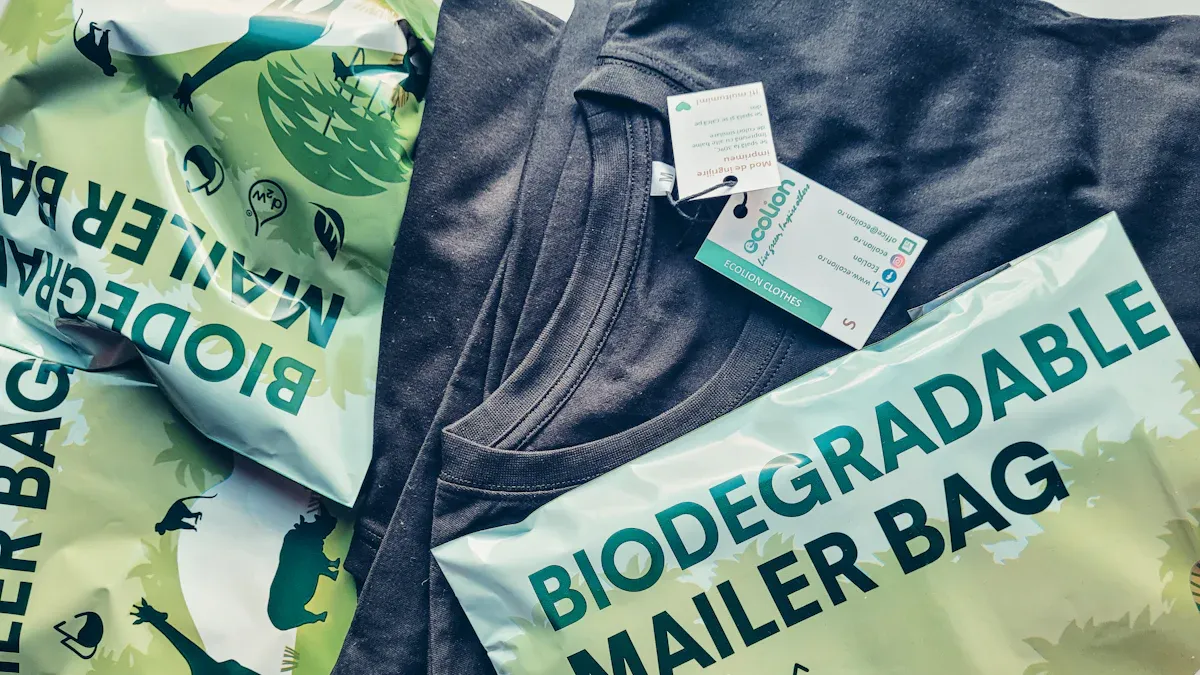
More companies are moving away from plastic. They use biodegradable materials instead. Some cool examples are:
- Edible packaging: You can eat the package, so there is no waste.
- Mushroom packaging: Made from fungi and farm waste, it breaks down fast.
- Compostable packaging: Made from things like cornstarch, it turns into soil.
- Lush Cosmetics: Sells products with no plastic containers.
- Pela Case: Makes phone cases that break down naturally.
A team at Northeastern University made food packaging from bamboo fiber and sugar. It breaks down in 60 days but stays strong when wet. Big brands like Unilever and Nestlé promise to make all their packaging recyclable, compostable, or biodegradable by 2025. You help this Global Shift every time you pick these products.
Consumer Expectations
You want more from brands now. You want packaging that keeps things safe and does not hurt the planet. You care about ocean pollution and want less plastic. Gen Z leads the way in asking for better recycling and greener choices.
Some trends you might see are:
- You want packaging made from eco-friendly materials.
- You look for clear labels that show where packaging comes from.
- You expect brands to be honest about how green their packaging is.
| Trend | Description |
|---|---|
| Demand for Eco-friendly Materials | You want packaging that helps the environment. |
| Transparency in Sourcing | You expect brands to tell you how and where they get their packaging. |
| Regulatory Pressures | You see rules pushing companies to use better materials. |
You also like packaging that is easy to use and keeps things fresh. Many brands add QR codes so you can learn more about the product and its packaging. You want both convenience and sustainability. When you see a brand that cares, you feel loyal and want to buy from them again.
Regulatory Pressure
You see new rules everywhere. Governments want companies to use less plastic and more earth-friendly materials. These rules push the Global Shift even faster.
| Regulation | Description | Impact |
|---|---|---|
| EU’s Packaging and Packaging Waste Regulation (PPWR) | All packaging must be recyclable or reusable by 2030 | Companies must switch to better materials and save money on fines |
| UK’s Extended Producer Responsibility (EPR) | Companies must offer reusable and refillable packaging | Less single-use packaging in stores |
| UN Global Plastic Treaty | Plans to end plastic pollution by 2040 | Pushes for more paper and plant-based packaging |
| EU Single-Use Plastics Directive | Bans some single-use plastics | More biodegradable options in stores |
| 2019 EU Directive | Bans plastic straws and cutlery | Less plastic in the ocean and more recycling |
You notice these changes when you shop. You see fewer plastic straws and more paper or bamboo ones. Companies must follow these rules or pay big fines. These laws help you and others make better choices for the planet.
Market Trends
Industry Adoption
Big companies are changing how they package things. Many brands now use eco-friendly materials and new designs. You see more biodegradable and compostable packaging in stores. Some companies let you refill bottles or bring back containers. A few brands use smart packaging that tells you if food is fresh or how to recycle it.
Here are some new trends you might see: More companies use plant-based materials to use less fossil fuel. You find packaging made from recycled or upcycled stuff. Water-based and solvent-free inks are used more, making packages safer for people and the planet. Biodegradable and bio-based materials help cut down on waste. Post-consumer recycled materials are important for a circular economy.
Different industries are making progress: Companies use more recycled content to cut waste and make things better. Using post-consumer recycled materials helps build a circular economy. New recyclable packaging protects products and meets industry needs. More brands pick biodegradable and bio-based materials for sustainability.
Food and beverage companies are leading the way. They use eco-friendly packaging to attract shoppers who care about the planet. Online food delivery uses greener options, so your takeout comes in compostable or recyclable containers.
You are important in this Global Shift. Your choices make companies improve their packaging.
Retail Transformation
Stores are changing fast to give you better packaging. When you shop, you see more products in eco-friendly boxes, bags, and bottles. Stores use new materials and smart tech to cut waste. In North America, many stores use bioplastics and reusable materials. This helps them meet your needs and show they care about the planet.
Some brands use recycled plant fibers in their packaging. This saves energy when shipping and lowers the carbon footprint. Stores use green packaging to build trust with you. When you see a brand using eco-friendly packaging, you feel good buying from them again.
Stores know packaging waste is a big problem. By using better materials, they help fight plastic pollution. They also follow new rules and show they care about responsibility. You see fewer single-use plastics and more things you can recycle or reuse.
Economic Impact
Switching to sustainable packaging helps the planet and changes company spending. At first, eco-friendly materials can cost more. Over time, companies save money by cutting waste and reusing packaging.
Here are some key points about the economic impact: Companies save money in the long run by reducing waste and reusing materials. More shoppers want sustainable products, so brands that use green packaging sell more. The global sustainable packaging market could reach $303.6 billion by 2025. This means strong growth and new jobs in the industry.
You help this change every time you pick better packaging. Your choices support companies that care about the future. As more brands join the Global Shift, you see more choices and better prices for eco-friendly products.
Challenges
Material Limits
Switching to sustainable packaging is not always easy. Many companies use packaging with many layers. Some layers can be recycled, but others cannot. This makes recycling very hard. Snack bags and juice boxes have layers that do not break down together. Some eco-friendly materials do not work as well as plastic. Paper and bioplastics can be weak or not water-resistant. They may not be as strong as plastic. Plastic is cheap and simple to use. Many companies still choose plastic. But plastic can hurt people and the planet.
- Multilayer packaging makes recycling harder.
- Paper and bioplastics can be weak or not resist water.
- Plastic is cheap and easy, but bad for Earth.
Waste Management
You want to recycle more, but it is not easy. New materials need better recycling systems. Some packaging, like coated paper, tries to replace plastic. It still needs more research to work well. Different materials have their own problems. Plastic keeps food safe but is hard to recycle. Glass is easy to recycle but heavy to move. Metal can be recycled but uses lots of energy. Paper breaks down fast but can harm forests.
- New materials need more research to recycle better.
- Plastic, glass, metal, and paper all have waste problems.
- Better collection and smart technology can help fix these issues.
Cost Barriers
You want to buy green products, but they cost more. Eco-friendly materials like compostable films cost more than regular packaging. This is hard for small brands with less money. Using recycled paper or plant-based stuff costs more. Companies may need new machines or special steps. These extra costs can make green products more expensive for you.
- Compostable and biodegradable packaging costs more.
- Small brands have trouble with higher costs.
- New technology and materials can raise prices for everyone.
Innovations
Biodegradable Materials
In 2025, more brands use new biodegradable materials. These materials break down fast and help keep Earth clean. You might see some cool choices:
- Starch-based bioplastics come from corn or potatoes. They are used in hard and soft packaging.
- Polylactic Acid (PLA) looks like plastic but is made from plants. It needs special composting to break down.
- Mushroom mycelium packaging uses fungi roots. It breaks down quickly and uses little energy.
- Seaweed-based packaging can be eaten. Some brands use it for sauces or snacks, and it melts in water.
- Milk protein films made from casein keep food fresh by blocking air.
- Hemp-based packaging is strong and breaks down naturally. You may not see it everywhere yet.
When you pick products with these materials, you help Earth. Every small choice makes a difference.
Reusable Packaging
More companies now use reusable packaging. This change saves money and cuts waste. Here is how some big names do it:
| Company/Organization | Key Outcomes |
|---|---|
| Anheuser-Busch InBev | Improved business and made packaging last longer. |
| DS Smith Plastics | Created reusable systems that help the planet and save money. |
| STIHL Inc. | Cut 760 tons of waste and saved money. |
| Goodwill Industries | Used space better and lowered their impact. |
| Cardinal Health | Reduced spoilage by 90% and saved $5.6 million each year. |
| Subaru | Saved $16 million and kept 28,000 tons of cardboard out of landfills. |
| Herman Miller | Saved $400,000 and kept 100 tons of waste away from dumps. |
| Svenska Retursystem | Delivered nearly 1 billion reusable crates, replacing single-use boxes. |
You might use reusable bags at the store. Some brands offer refill stations. These changes make it easy for you to help the planet.
Smart Solutions
Smart packaging is everywhere now. Companies use new tech to make packaging safer and greener. Some packages have sensors to show if food is fresh. Others use special coatings to keep food safe longer. These smart features help you waste less and save money.
Active packaging uses things like oxygen absorbers to keep food fresh. Intelligent packaging can track temperature or freshness with color changes. You get more info and less waste. By picking smart solutions, you help companies use fewer resources and protect Earth.
Regulations & Attitudes
Government Mandates
New laws tell companies how to package things. Many states in the U.S. have made new rules. These rules want less plastic and more earth-friendly stuff. Here are some changes:
- New Jersey made the Packaging Product Stewardship Act in November 2024.
- Oregon finished rules for its Plastic Pollution and Recycling Modernization Act. These rules start July 1, 2025.
- Maine’s EPR law starts in 2027. By 2030, half of packaging must be recyclable, reusable, or compostable.
- Colorado will make companies report packaging volume in August 2025.
- California’s SB 54 says companies must use 25% less single-use plastic by 2032.
- Minnesota’s Packaging Waste and Cost Reduction Act wants less waste and less toxic stuff. Reporting may start in 2027.
These laws help the Global Shift go faster. You see more recyclable and compostable packages in stores now.
Consumer Behavior
You help companies change how they package things. Many people want packaging that is good for Earth. You look for clear labels and want to know where materials come from.
The study shows people like packaging that is good for the planet. They want materials that are easy to recycle and break down. People want to know where packaging comes from. They want real proof, not just words.
You trust brands that are honest about recycled packaging. When more people ask for green products, companies use more recycled stuff. This makes new designs and better recycling systems. Your choices help companies decide what to do next.
Corporate Responsibility
Companies know you care about Earth. Some brands use more recycled materials and help the circular economy. For example:
- Pregis uses more recycled stuff in its packaging and helps circular practices.
- Their AirSpeed HC Renew PCR uses recycled materials from people.
- Pregis also has paper you can recycle at home. They do this before it is required.
You stay loyal to these companies. When you buy from brands that care, you help other companies want to do better too.
Future in 2025
New Materials
By 2025, you will see lots of new packaging materials. Companies want packaging that breaks down quickly and does not hurt the planet. You might notice some new types:
- Biodegradable, compostable, and recyclable materials will be popular.
- Bioplastics from plants like corn starch and sugarcane are growing fast.
- Compostable bioplastics like PLA and PHA are showing up everywhere.
- Mushroom and seaweed packaging are creative and good for Earth.
- Recycled plastics and paper packaging are used more often.
You will find these materials in more stores. People want eco-friendly choices. Brands are changing because you care.
Circular Economy
You help the circular economy work. This means you use, reuse, and recycle packaging instead of throwing it away. The Ellen MacArthur Foundation brings together over 400 groups to make packaging better. When you pick recyclable or reusable packaging, you keep materials in use longer.
The circular economy helps the planet and creates new jobs. It can also help local businesses grow. Companies design packaging to fit this model. You will see more recycled content, upcycled materials, and refillable systems. This makes it easier for you to live green.
Tip: Look for packaging that says “recyclable,” “compostable,” or “made from recycled content.” Your choices matter!
Global Standards
In 2025, new rules will change packaging everywhere. These standards push companies to use better materials and recycle more. Here are some important rules:
| Regulation | Description | Implementation Year |
|---|---|---|
| Global Plastics Treaty | Agreement to cut plastic pollution and boost recycling | 2025 |
| European Packaging and Packaging Waste Directive (PPWR) | Focuses on reusable, recyclable packaging and recycled content targets | 2025 |
| Producer Responsibility Obligations (UK) | Producers must help recycling and reduce waste | 2025 |
| Extended Producer Responsibility (EPR) in the US | Producers help pay for recycling and packaging collection | 2025 |
| Asia-Pacific Frameworks | Countries update rules to cut plastic waste | 2025 |
You will see clearer labels and better recycling systems. When you shop, you help shape the future by picking sustainable packaging.
You play a big part in the global shift toward sustainable packaging. When you choose eco-friendly products, you help drive change. Many groups work together to create better packaging, like the Global Self-Care Federation’s push for recyclable blister packs. New ideas keep coming—think seaweed materials or lighter, smarter designs.
Over 60% of shoppers pay more for green packaging, and more than 30 countries have new rules to support this shift.
Let’s keep moving forward. Try to measure your impact, set small goals, and ask brands for more sustainable choices. Your actions matter for a cleaner future.
FAQ
What is sustainable packaging?
Sustainable packaging uses materials that are safe for the planet. You can recycle, reuse, or compost it. Brands pick these options to cut waste and protect nature. Look for labels like “recyclable” or “compostable” when you shop.
Why does sustainable packaging cost more?
Eco-friendly materials often cost more to make. Companies may need new machines or special designs. Over time, prices can drop as more people choose green options. You help lower costs by picking these products.
How can you tell if packaging is truly eco-friendly?
Check for clear labels. Look for recycling symbols, compostable marks, or QR codes. Some brands share details on their websites. If you feel unsure, ask the company or look up the product online.
What should you do with compostable packaging?
You can put compostable packaging in your home compost bin if the label says so. Some types need special composting at a facility. Always read the instructions. If you do not have composting, check for local drop-off spots.