


Have you ever wondered if your shopping choices really make a difference? You are not alone. Almost nine out of ten people worldwide have already changed the way they shop to help the planet. Many shoppers now choose Eco-Friendly Shopping, even though some worry about high costs or feel unsure about what “sustainable” means. You can start with small steps, like bringing reusable bags or making a list. Each action adds up. Why not try one change today and see how easy it feels?
Key Takeaways
- Begin with small steps like using reusable bags. Make a shopping list before you go. These easy changes help lower waste. They also help you stay focused when shopping.
- Buy secondhand things to save money. This also helps lower waste. Each reused item keeps good products out of landfills.
- Shop at local stores to lower pollution. This helps your community grow stronger. Local shopping often means fresher products. It also has less impact on the environment.
- Pick products with recyclable or compostable packaging. This keeps waste out of landfills. It also helps make the planet healthier.
- Plan your shopping trips ahead of time. This helps you avoid impulse buys. A list and budget help you get only what you need.
Assess Your Shopping Habits
Spot Patterns
You probably have a shopping routine, even if you do not notice it. Take a moment to think about your last few trips to the store or your online orders. Do you buy the same snacks every week? Do you grab extra items you do not really need? Many people want to live more sustainably. In fact, 89% of shoppers say an environmentally sustainable lifestyle matters to them, and 94% believe climate change is a big issue. Still, only about 1% to 5% actually buy greener products. Check out this table to see how people feel about Eco-Friendly Shopping:
| Statistic | Value |
|---|---|
| Consumers who agree that an environmentally sustainable lifestyle is important | 89% |
| Consumers who believe climate change is a major issue | 94% |
| Consumers who currently buy sustainable products | 49% |
| Consumers wanting to buy greener products | 30%-70% |
| Actual percentage of consumers who do buy greener products | 1%-5% |
You can spot your own patterns by keeping a simple list. Write down what you buy most often. Notice if you tend to buy things on impulse. This step helps you see where you can make small changes.
Track Waste
Now, let’s talk about waste. Shopping creates a lot of packaging, especially with online orders. Did you know that online shopping adds about 3.4 kg of packaging waste for every $100 you spend? This packaging makes up about 1.06% of all the waste each person creates in a year. That may not sound like much, but it adds up fast.
- Online shopping generates extra packaging waste.
- Packaging waste is a small part of your total trash, but it is easy to reduce.
Try this: After each shopping trip, look at what you throw away. Count how many plastic bags, boxes, or wrappers you toss. You might be surprised! When you track your waste, you can find new ways to cut back and start your Eco-Friendly Shopping journey.
Eco-Friendly Shopping Choices
Buy Secondhand
Buying secondhand items helps the planet a lot. When you shop at thrift stores or online resale shops, you help cut down on waste. You also save resources. Many people throw away clothes and household goods that are still good. By buying secondhand, you give these things a new home. This keeps them out of landfills.
Here’s how secondhand shopping helps the earth:
| Environmental Benefit | Details |
|---|---|
| Reduction in Waste | 16 million tons of textile waste made each year in the U.S.; only 15% gets recycled. |
| Conservation of Resources | Making one cotton t-shirt uses up to 2,700 liters of water. |
| Carbon Footprint Reduction | The fashion industry makes about 10% of global carbon emissions. |
| Support for Ethical Practices | Many secondhand shops help charities and people in need. |
| Promotion of Circular Economy | Reuse and recycling lower the impact on the environment. |
You save money and find cool, unique things. Next time you need clothes, furniture, or electronics, try a secondhand store first. Every reused item means less waste and fewer new things made.
Tip: Try a clothing swap with friends. You can get new clothes without spending money or making more waste.
Shop Local
Shopping at local stores and farmers markets is smart for Eco-Friendly Shopping. Local shops often get goods from nearby farms or makers. This means your food and products travel shorter distances. It helps cut down on pollution from trucks and planes.
- Less travel means less pollution.
- Local businesses often use better practices than big chains.
- Supporting local shops keeps money in your town and helps protect green spaces.
When you buy local, you get fresher food and special products. You help your neighbors and make your town stronger. Try going to a farmers market this weekend or buy bread from a local bakery.
Choose Organic
Choosing organic products helps the environment, but it’s good to know the facts. Organic farming does not use synthetic chemicals. It helps keep soil healthy. This can protect bees, birds, and other animals. But organic farms sometimes use more land and energy than regular farms.
| Factor | Organic Products | Conventional Products |
|---|---|---|
| Land Use | 49% more land used | Less land needed for each item |
| Greenhouse Gas Emissions | 17% higher in some studies | Lower for some products |
| Energy Consumption | More fossil fuel energy per item | Less energy because of fertilizers |
| Biodiversity Risk | Lower risk, no synthetic inputs | Higher risk from synthetic fertilizers |
Look for organic labels on fruits, veggies, and packaged foods. If you want to shop Eco-Friendly, buy organic when you can. Try to choose organic for foods you eat a lot or that use many chemicals.
Note: Buying local and in-season produce, even if it’s not organic, is also good for the planet.
Support Small Businesses
Small businesses help make shopping better for the earth. They often buy from local farms and use in-season produce. This means less shipping and fresher goods. When you spend $100 at a local shop, about $50 stays in your town. Big chains only keep about $14 local.
| Evidence Type | Description |
|---|---|
| Carbon Emissions | Small businesses cut emissions by getting materials locally. |
| Economic Impact | Local shops return 52% of money to the local economy. |
| Community Support | Spending at local businesses keeps more money in your town. |
You help create jobs and support your neighbors. Many small shops use less packaging and sell special, long-lasting products. When you pick quality over quantity, you help cut down on waste and support a healthier planet.
Remember: Every time you shop, you make a choice. Supporting small businesses is an easy way to make your Eco-Friendly Shopping routine even better.
Sustainable Products and Packaging

Avoid Plastic
Plastic packaging is everywhere. You see it on snacks and shipping boxes. It is in stores and online orders. Even farmers markets use plastic. Most plastic ends up in landfills or the ocean. It takes a very long time to break down. You can help by picking products with less plastic.
- Choose items with paper, glass, or metal packaging.
- Do not buy things wrapped in lots of plastic.
- Find refill stations for soap or shampoo.
Many companies use bubble wrap and styrofoam peanuts. These hurt the environment. They do not meet modern sustainability standards. You can help by skipping products with these types of packaging.
Tip: If you buy something with plastic, check if you can recycle it. Some plastics have codes that help you sort them.
Pick Recyclable or Compostable Packaging
You have more choices for better packaging now. Recyclable and compostable packaging keeps trash out of landfills. Compostable packaging breaks down fast. It helps composters and makes soil better. It fits into a circular economy.
- Compostable packaging keeps waste out of landfills. It also lowers methane gas, which is very strong.
- Recyclable packaging can be used again and again. You must sort it the right way.
- Biodegradable packaging sounds good. It can take a long time to break down.
Here is a quick look at different packaging types:
| Factor | Recyclable | Biodegradable | Compostable |
|---|---|---|---|
| Breakdown Time | Can be recycled many times | Varies (months to decades) | 90% breaks down in 180 days (industrial composting) |
| Major Challenge | Contamination and low recycling rates | Unclear labels and methane in landfills | Not enough composting places |
People make mistakes when picking packaging. Some use too much packaging. Some pick sizes that waste space. Many ignore sustainable options and use plastic. You can do better by choosing packaging that uses less material and is easy to recycle or compost.
- Using too much plastic and materials that cannot be recycled.
- Not picking sustainable packaging.
- Choosing packaging that wastes space.
Note: Learn how to throw away packaging the right way. This helps you make better choices and keeps waste out of landfills.
Use Reusable Bags
Reusable bags are an easy way to shop greener. Use them for groceries, clothes, or anything you buy. They last much longer than single-use bags. Here is how different bags compare:
| Bag Type | Average Lifespan |
|---|---|
| Plastic | 12 minutes |
| Paper | 1 month |
| Cotton | 4 years |
| Non-woven polypropylene | N/A |
Cotton bags last for years. Plastic bags get used for only a few minutes. Then you throw them away. Using reusable bags cuts down on waste. You save money over time.
Tip: Keep reusable bags in your car or backpack. You will always have one ready.
How to Make Better Choices
You want to pick products and packaging that are really sustainable. Sometimes companies say “eco-friendly” or “natural” without proof. Watch out for green packaging or claims about biodegradability that do not explain details. Here are ways to spot real sustainable products:
- Look for third-party certifications on labels. Check them online.
- Think about the product’s life cycle and its effect on the earth.
- Pick items made from recycled or safe materials.
- Choose products that last longer and can be reused or recycled.
- Be careful with marketing claims that sound good but are not true.
Learn about recycling rules in your area. Every city has different rules. Some places take certain plastics, others do not. Knowing these rules helps you sort your trash and recycle more.
Tip: Share what you learn with friends and family. You can help others make better choices and build a stronger Eco-Friendly Shopping routine.
Plan for Eco-Friendly Shopping

Make a List
You can start every shopping trip with a simple list. This step helps you buy only what you need and skip things you do not want. When you plan meals for the week, you know exactly which foods to buy. You waste less food and save money. Try writing your list before you leave home. Stick to it at the store. If you shop when hungry, you might grab snacks you do not need. A list keeps you focused.
- Meal planning and shopping routines help you cut food waste.
- Waiting before buying non-essentials lets you decide if you really need them.
- A budget with “fun money” helps you plan for treats and avoid impulse buys.
- Recognize emotional triggers and ignore flashy ads to shop smarter.
Tip: Use your phone or a notebook to keep your list handy. You can check off items as you shop.
Group Purchases
You can save time and reduce waste by grouping your purchases. Try to buy in bulk when you need pantry staples. This way, you use less packaging and make fewer trips. You can also shop with friends or family. Share big packs of snacks or cleaning supplies. This helps everyone save money and cut down on waste.
- Shopping with a meal plan and grocery list lowers unnecessary purchases.
- Creating a budget makes you aware of spending and helps you focus on what matters.
- Waiting before buying non-essentials helps you avoid impulse buys.
Here’s a quick look at how planning your shopping can impact your budget:
| Evidence | Percentage |
|---|---|
| Likely to cut back on consumer electronics (e.g., LED lights, solar water heaters) | 48% |
| Likely to reduce sustainable apparel and shoes purchases | 46% |
| Likely to cut back on healthcare products | 40% |
| Likely to cut back on sports gear | 42% |
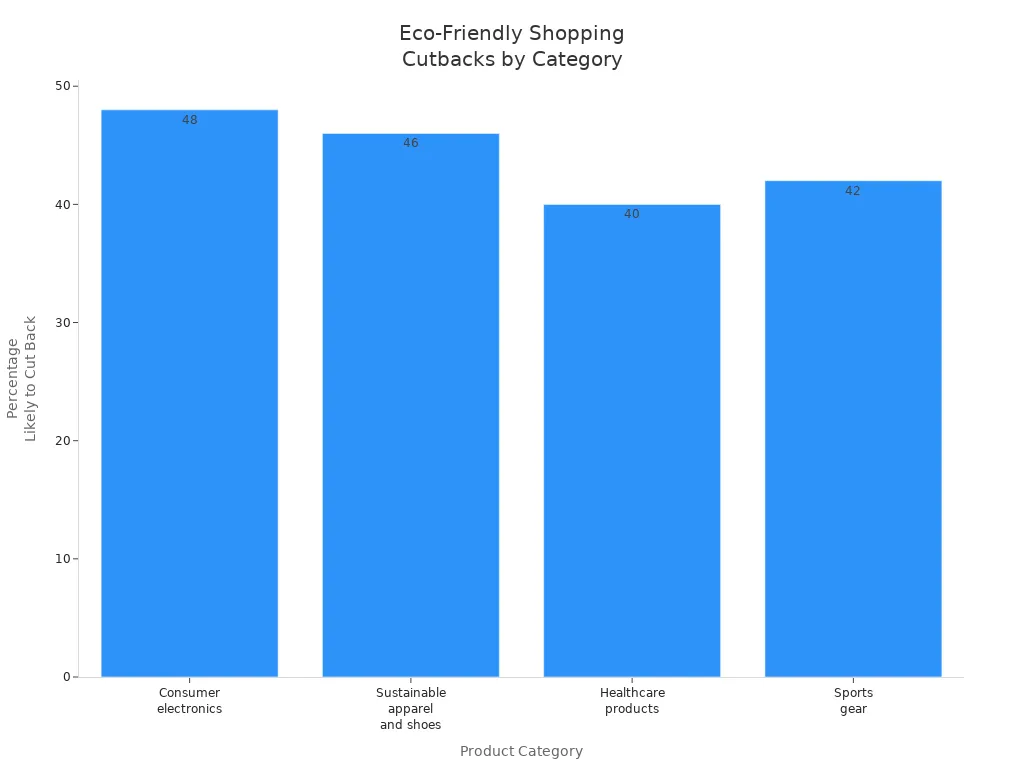
Many people believe sustainable products cost more. In fact, 69% think eco-friendly options have a higher price tag. When budgets get tight, people often cut back on these purchases. Planning helps you choose what matters most.
Prepare Reusables
You can make every shopping trip greener by preparing reusable items. Bring your own bags for groceries, clothes, or anything else. Use cloth produce bags for fruits and veggies. Pack jars or glass containers for bulk items like rice or nuts. If you shop at stores with bulk bins, a sharpie helps you mark the codes and tare weights on your containers.
- Reusable shopping bags
- Cloth bags for fresh food
- Jars or glass containers for bulk items
- Sharpie for marking codes and weights
Note: Keep your reusable bags and containers in your car or by the door. You will always be ready for your next Eco-Friendly Shopping trip.
Extra Tips to Reduce Your Footprint
Buy Quality, Not Quantity
You make a big difference when you choose quality over quantity. High-quality products last longer, so you replace them less often. This means you buy fewer new things and help the planet. When you pick sturdy shoes or a well-made backpack, you cut down on waste and lower carbon emissions from factories and shipping. Many shoppers now look for durable items. In fact, 72% of people say they buy more environmentally friendly products than they did five years ago. Even more—81%—plan to keep buying better products in the future. You can join this trend and make your Eco-Friendly Shopping routine stronger.
Tip: Before you buy, ask yourself if the item will last. If it does, you save money and help the earth.
Learn Recycling Rules
Recycling sounds easy, but you need to know the rules. Not everything goes in the bin. You should focus on bottles, cans, paper, and cardboard. These materials get recycled most often. Keep food and liquids out of your recycling. Even a little bit can ruin a whole batch. Never put loose plastic bags or bagged recyclables in the bin. Plastic bags jam the machines and slow down recycling.
Here’s a quick checklist for recycling at home:
- Recycle bottles, cans, paper, and cardboard.
- Keep food and liquid out of recycling.
- Avoid putting plastic bags in the bin.
Note: Check your city’s recycling guide. Rules can change from place to place.
Share and Borrow
You do not always need to buy new things. Sharing and borrowing help you save money and protect the environment. When you borrow a book or a tool, you keep products in use longer. This reduces waste and lowers CO2 emissions. Sharing also builds trust and brings people together. You help your community and make new friends. By reusing items, you cut down on mass manufacturing, which is a big cause of climate change.
- Sharing extends the life of products.
- Borrowing keeps resources in circulation.
- Reusing lowers your carbon footprint.
Tip: Start a sharing group with neighbors or friends. You can swap games, clothes, or kitchen gadgets.
You can build an Eco-Friendly Shopping routine by making small changes every day. Start with easy steps like using reusable bags, buying secondhand, or planning your shopping list. Research shows that learning about the environmenthelps you make better choices over time. You do not need to change everything at once. Pick one or two tips and see how they work for you. Your actions matter. Share your favorite eco-friendly shopping ideas in the comments and inspire others to join you!
FAQ
What is the easiest way to start eco-friendly shopping?
You can begin by bringing reusable bags and making a shopping list. These steps help you avoid waste and buy only what you need. Try one change at a time. You will see progress quickly.
How do I know if a product is truly sustainable?
Look for trusted labels like USDA Organic or Fair Trade. Check if the product uses recycled materials. You can also read reviews online. Many brands share details about their eco-friendly practices.
Can I shop eco-friendly on a tight budget?
Yes! Buy secondhand items and shop at local markets. You save money and help the planet. Bulk buying and sharing with friends also lower costs. Small changes make a big difference.
Why should I avoid plastic packaging?
Plastic takes hundreds of years to break down. It harms wildlife and pollutes water. You can choose paper, glass, or compostable packaging instead. These options protect nature and reduce your trash.
What if my local store does not offer sustainable products?
You can ask the store manager to stock eco-friendly items. Shop online for green products. Support small businesses in your area. Every purchase sends a message about what you care about.